
Families Falling in Love with Books
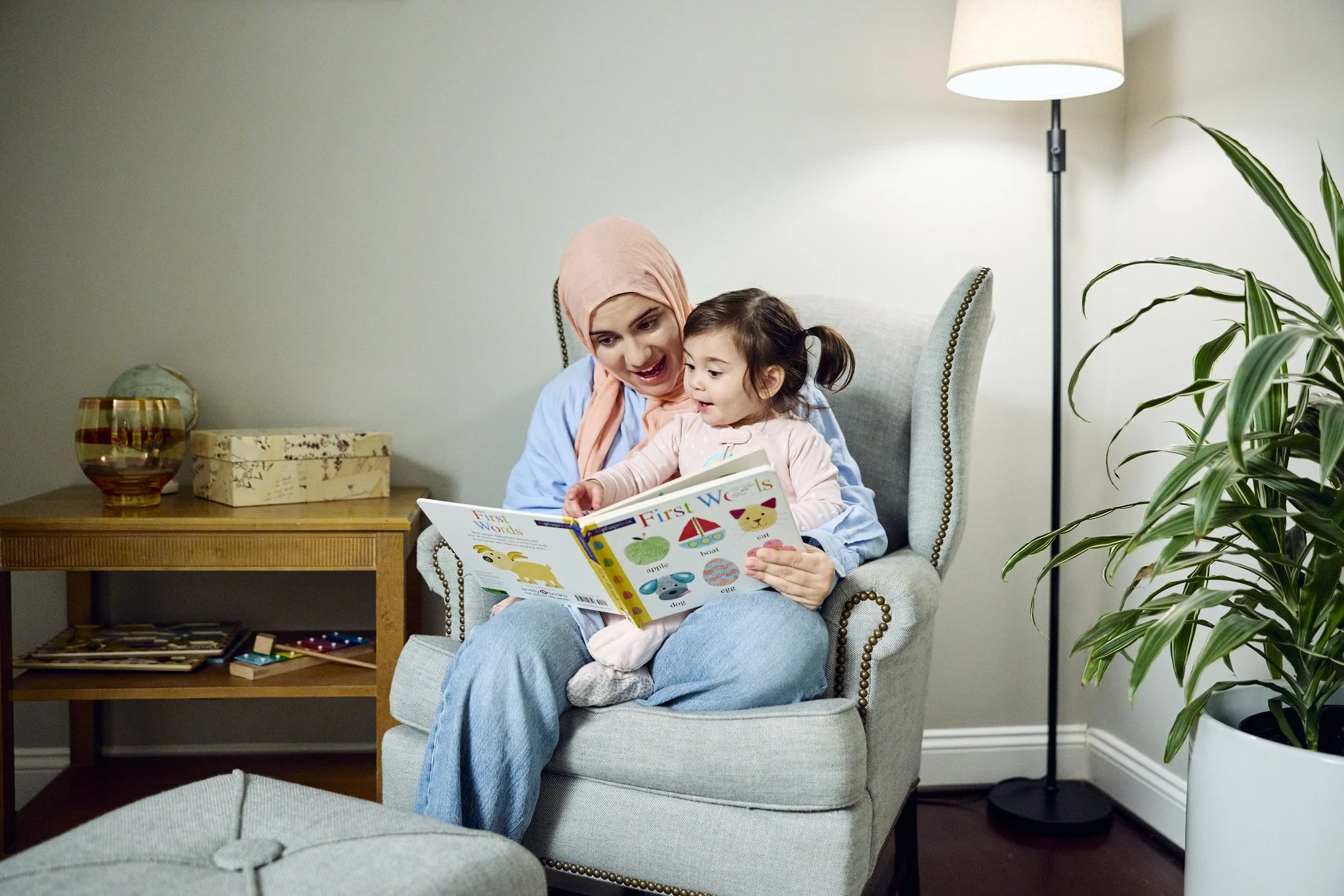
By Mark W.F. Condon, Unite for Literacy vice president, and Jean Anne Clyde, EdD
I know I should be reading to my kids… but where do I begin?
You want your child to love books. You've heard, forever, how much it matters. The trouble is that you may have never loved books or reading.
Maybe when you were learning to read, you didn’t have the best experience and now picking up a book for fun is the last thing you want to do. The damage of reading things you didn’t enjoy, of constantly being corrected, of having to "perform" reading aloud, has stuck with you.
If that's you, take a breath. You're exactly the parent this blog is written for. You don't need to have been a reader to raise one. You just need a few small habits, a willingness to learn alongside your child, and some books to start with.
It all begins with books!
To engage young children in the joys, surprises and benefits of reading, it is important to find books your kids will enjoy. Watch your child. Notice what lights them up. Animals? Bath time? Mud and sand? The faces people make? Whatever it is, there is almost certainly a beautifully illustrated picture book about it.
You don't have to buy them, you can try looking in these places:
Your local library. Librarians are wonderful matchmakers between kids and books — tell them what your child likes and watch what they pull off the shelves.
School book fairs. Schools publicize them, and titles are often a few dollars.
Flea markets and thrift stores. Picture books for a dollar or less.
Little Free Libraries. Those small, house-shaped boxes in front yards and outside churches. Take one, leave one. There are over 200,000 worldwide — find the map at littlefreelibrary.org.
Friends and family. Other parents often have stacks they've outgrown.
If you live somewhere without these resources, are new to a country, or want books in a language other than English, Unite for Literacy offers a free online library of more than 600 picture books at UniteforLiteracy.com, narrated in 65+ world languages, with American Sign Language video for many titles. Nothing to download, nothing to buy.
Become a "Kidwatcher"
The educator Yetta Goodman called it kidwatching — the simple, powerful practice of paying close attention to what your child does. Their facial expressions, the books they reach for, the pages they linger on, the sounds they make even before they have words. The more you watch, the better you'll get at choosing books they'll love and noticing what they're learning.
Kidwatching is also how you'll know when a book isn't working. If your child closes it mid-page, that's information, not failure. Maybe they're done. Maybe it's the wrong book today. Maybe they want the one with the dog again, for the eleventh time. Follow them.
Learn how to read aloud by watching the pros
A great picture book read in a flat voice will lose almost any child’s interest. Good news: lively reading is a skill, not a personality trait, and you can learn it.
Take your child to children’s story time at your local library. Watch what the librarian does with their voice, their face, their pauses. Notice how they invite kids in: "Where do you think they're going?" "Uh-oh — what's that sound?" Notice the wide eyes, the whisper, the sudden boom.
Then practice at home, alone, or with your child. Try out different voices, for example, Little Pig versus Big Bad Wolf. Read the BIG print loudly. Read the small print as a whisper (kids find whispers thrilling). Show your child that the way something is printed gives clues about how it sounds.
You will feel silly at first. Do it anyway!
Build small daily rituals around books
Make reading something that just happens, like brushing teeth or bedtime routines. Here are a few tips to build the habit:
Pick predictable times. Before nap, after bath, last thing before lights out.
Make a cozy book corner. A basket, a small shelf, a cushion. Somewhere your child can reach books on their own and a place you can sit together.
Keep the collection fresh. Rotate in new titles from the library. Bring favorites back into view on rainy days.
Pack books like snacks. Doctor's office, long car ride, restaurant wait. Having a couple of well-loved books in your bag is a lifesaver. (Or pull up Unite for Literacy’s digital library on your phone!)
Invite their stuff in."Should we bring your stuffed dog to read with us today? What about your blanket?" Small choices give kids a sense of ownership over the ritual.
As you read together, make connections and invite wondering
When your child points at something or asks about it, link what's on the page to something they already know. "Look, Trixie and her daddy are at the laundromat. We've been to one of those, remember?" Connecting the story to real life is how books start to mean something.
Pause sometimes and wonder out loud. "Hmm — what do you think will happen next?" The prediction doesn't need to be right. It just gets your child thinking about how stories work, and how to notice clues in faces, in pictures, in what came before. Over time, they will start noticing details on their own and making predictions. (Sometimes their guesses can be surprisingly funny!)
Skip the quizzes. Instead of "What is the bunny's name?" try "I wonder how Mommy knew the bunny was missing?" Talk about books the way families talk during a TV show: casual, curious, side-by-side.
Reread favorites (and of course, talk about them)!
Your child will ask for the same book again. And again. And then twice more! Read it every time, with the same drama as the first round. Eventually they won't let you skip a single page and that's a sign they're listening closely and learning the rhythm of the language.
When a book becomes a favorite, pause now and then and let your child fill in the words they know. You'll smile when you hear them "read" with the same expression you used. That's not just memorization, that's the foundation of fluent reading.
Celebrate your child’s early efforts
When your child starts "reading" a familiar book back to you, the words coming out of their mouth may not match the words on the page. No need to correct them! They've captured the essence of the story, and that is exactly what's supposed to happen.
If you’re a careful kidwatcher, you’ll see that with each reading, they are inching closer to what’s on the page.
Most of all keep it fun!
If reading time is fun, your child will keep coming back to it. They'll show up with an armload of books, climb in your lap, and demand, "Read!" That's the moment you'll know the magic has taken root.
And here's the quiet part: somewhere along the way, you may notice that you've started to love books, too. Your early negative reading experiences are being slowly replaced by the small pleasures of reading a story with someone you love.
That's the gift hiding inside reading to your child. You both get to fall in love with books.
Where to find books and support
Unite for Literacy - free picture books in 65+ languages: UniteforLiteracy.com. To switch languages, click the globe icon on the dark blue stripe above the books. Questions about adding a language? Email Mark Condon at MarkWFCondon@UniteforLiteracy.com.
Little Free Libraries - find ones near you: littlefreelibrary.org
Recommended reading for parents: Reading with Babies, Toddlers & Twos: A Guide to Laughing, Learning and Growing Together Through Books by Susan Straub and KJ Dell'Antonia, with Rachel Payne (Sourcebooks, 2013). Tips, book lists, and research-based advice in a warm, funny voice. Our favorite resource for parents of young children.
Reference: Goodman, Y. (1978). "Kidwatching: An alternative to testing." National Elementary School Principal.